
Maker builds a website that runs his whole 3D printing service
One site takes the quote requests and the files, prices every print from one rates file, and writes the quotes and invoices as PDFs.
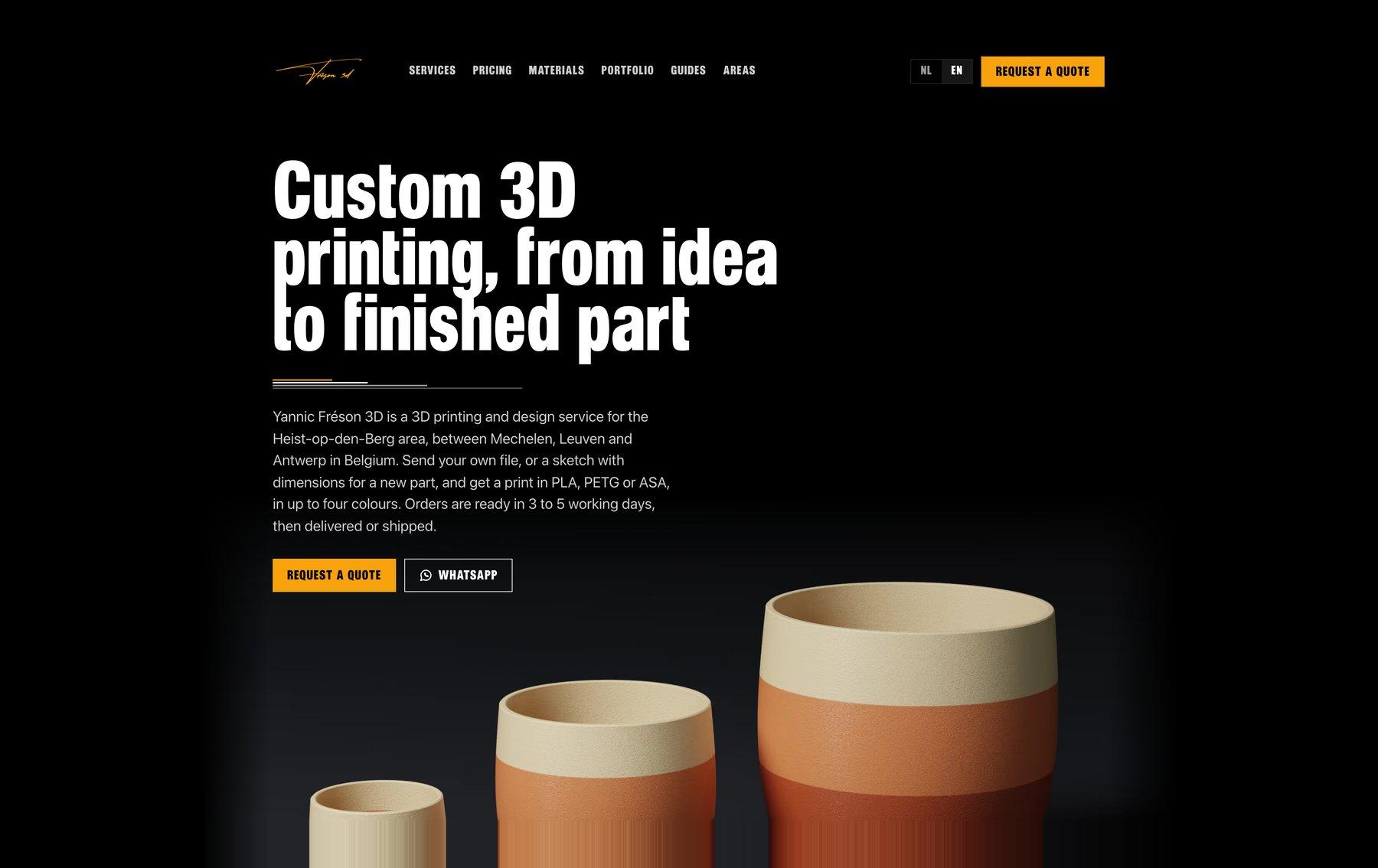
I print on a Bambu Lab P1S. The site is where everything else happens. It is a Next.js app, statically generated and hosted on Vercel. Dutch pages have no prefix; English pages live under /en. Every page is built from one content folder, and a test checks each one: title and description length, internal links, image keys, duplicate paths and FAQ questions.
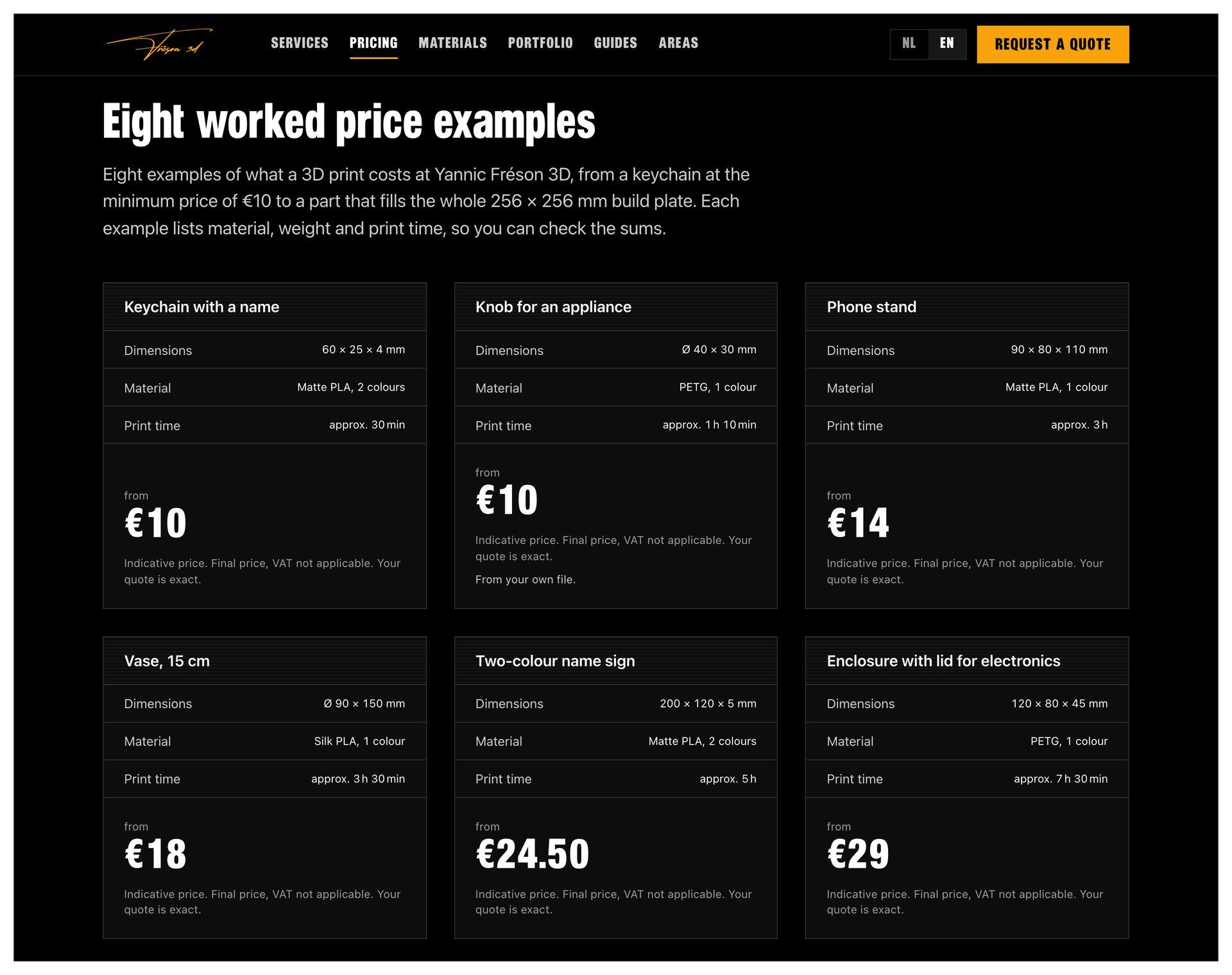
Every price comes from one rates file: a rate per gram for each material, €1.20 per print hour, €10 minimum per order, and €60 an hour for design work, billed per 15 minutes. The pricing page works through eight examples, from a €10 keychain to a part that fills the whole build plate. There is no shop and no pickup. Parts are delivered to the door in the region or shipped.
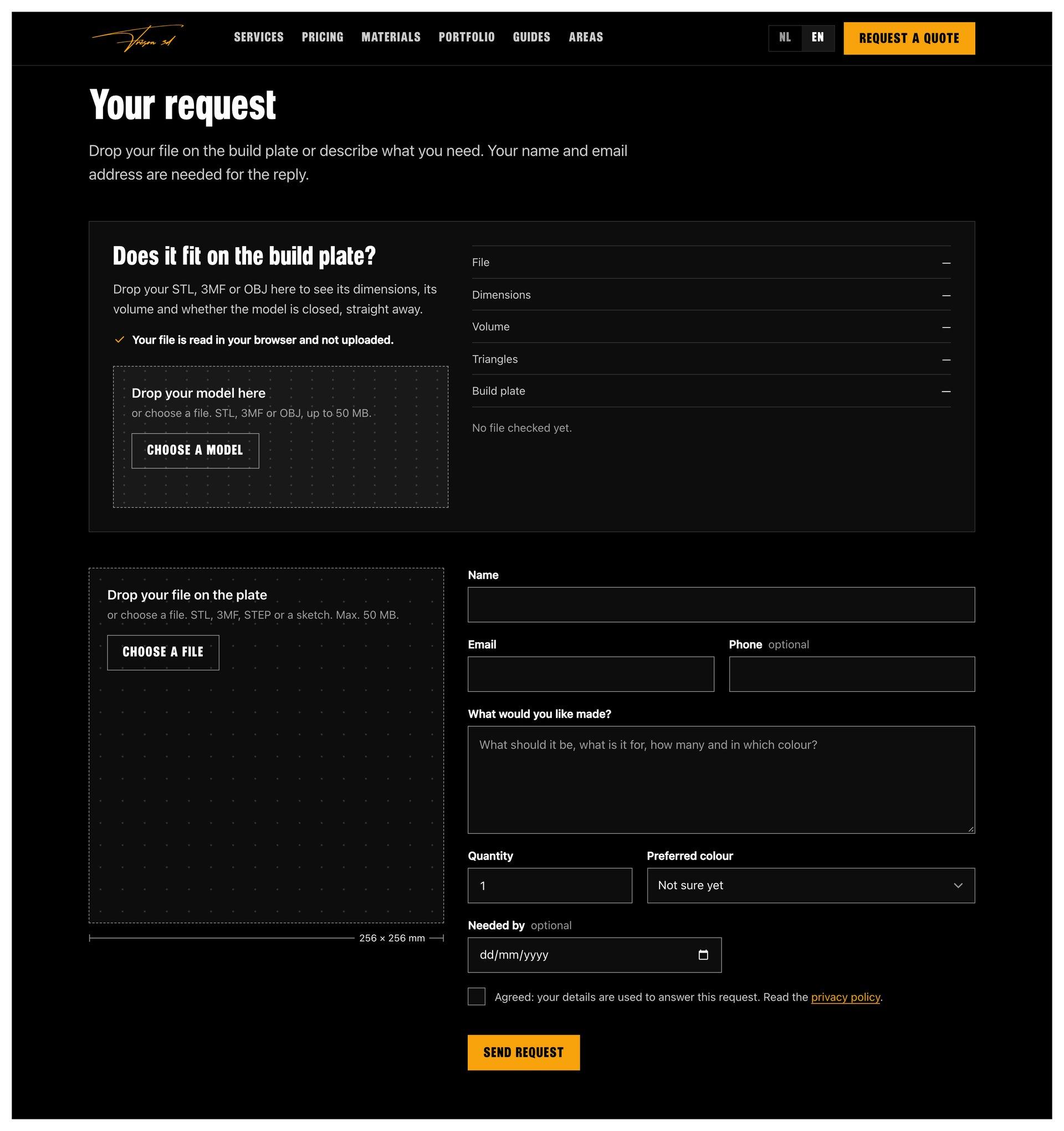
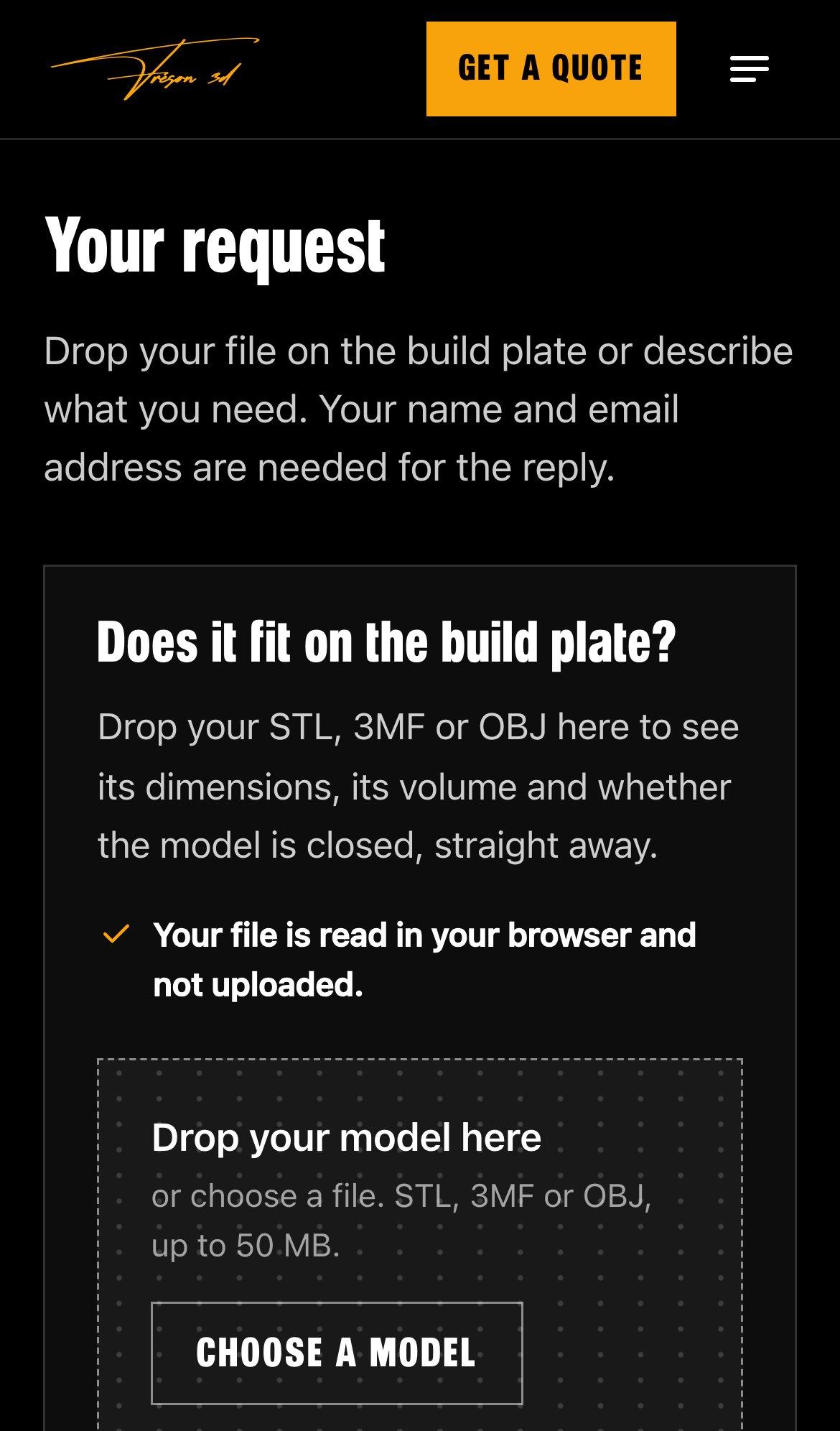
The quote form validates on the server and still works without JavaScript. Files go straight from the browser to a private Vercel Blob store, up to 50 MB each. The request goes out by email through Nodemailer, with the customer as reply-to. A honeypot, a rate limit and Cloudflare Turnstile keep the spam out. Turnstile only loads when the form comes near the screen. Before sending, a visitor can drop an STL, 3MF or OBJ on the build plate. A Web Worker measures it in the browser, and a three.js preview turns it on the plate. That file is never uploaded.
The privacy policy promises that uploads are deleted after 90 days. So every night at 03:00 UTC, a Vercel Cron job lists the uploads and deletes the ones that are older.
Behind a login sits the back office. A calculator reads a sliced Bambu Studio file and turns it into a price breakdown and a quote text in Dutch and English. It installs as its own app. One button takes the calculation to a documents page that draws the quote or invoice as a PDF with pdf-lib, right in the browser. Nothing is uploaded or stored.
Around it all are guides and materials pages: nine guides in Dutch and two in English, and a page each for PLA, PETG and ASA, with a comparison table built on the manufacturer’s figures.
In short
Yannic Fréson 3D is a 3D printing and design service for the Heist-op-den-Berg area. I built the whole business into one site: the pages in Dutch and English, the quote form, the prices, and the quotes and invoices.
More from this edition
- Data
Nerdland’s Discord gets its own year in review
A quiet scrape of a year of messages becomes per-channel statistics and awards for the most-reacted posts.
- Tools
Claude Code agents get a pixel-art office, with a gong for long jobs
Every running agent gets a desk and a card saying what it’s doing. When it goes idle, it wanders off to the break room.
- Hacks
Alarm goes off, and Spotify starts playing by itself
A phone macro wakes the PC, and a Discord bot tells Spotify to play Liked Songs through the speakers.